
Continuous improvement: the UniTo cornerstone
At the basis of the three scopes of the UniTo Strategic Plan 2021-2026, a further cross-cutting goal for constant improvement will nurture those good practices of planning, implementation, constant monitoring and periodic review. The challenging innovative strategies, aim at increasing potential and solving critical issues. The process emphasises transversality in order to foster belonging, inclusiveness and sustainability, and improve training, research and public engagement, locally, digitally and internationally.
Transversal goal
The prerogatives of the University’s Quality Assurance system are to promote quality by constantly improving processes and optimising resources, by consistent planning, taking action, monitoring results and evaluating any corrective actions needed to maintain or improve results. In accordance with the provisions approved by the Board of Directors, the coordination of the operations for monitoring the progress of the Strategic Plan is entrusted to the Quality Commettee.
Continuous strategic improvement at UniTo starts from the analysis of objective data relating to teaching, research and "third mission". These processes are different in terms of input, output and resources used, but they all share a significantly long time frame: the minimum unit of measurement is the academic year or the calendar year, depending on the case.

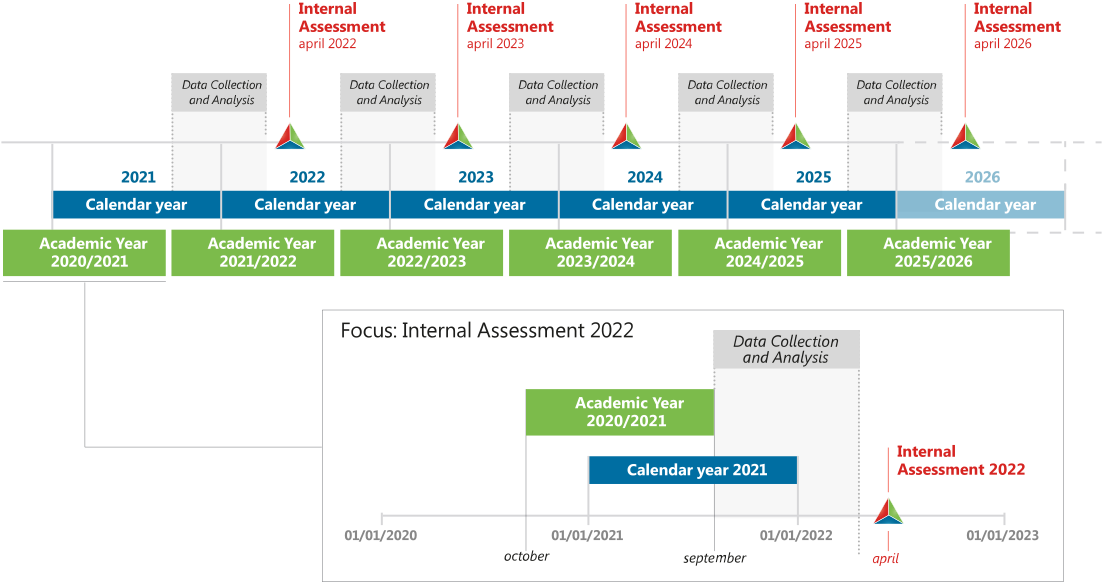
For this reason, the need to have consolidated and significant data has led to an annual window for data collection and analysis in order to measure and assess the results achieved during the year: starting each autumn, data referring to the academic year that has just ended (teaching and student careers) is collected and analysed, and at the beginning of the following year, data relating to the processes that can be measured during the calendar year that has just ended (research, "third mission" activities, economic and financial aspects) are collected and analysed.
The following figure shows the timing of periodic monitoring over the six-year period of this Strategic Plan, with a detailed focus on institutional monitoring in 2022.
During monitoring, the Quality Commettee, in constant dialogue with the Strategic Plan governance and management, will collect data and information on the indicators and the progress of each action. After assessing the documentation collected, the PQA will report the main evidence to the Rector and the Deputy-Rector, encouraging continuous improvement and timely corrective action to achieve the goals that have been set.
At an institutional level, the Governing body of the University, the Academic Senate and the Board of Directors, shall be briefed once a year in April, at the closure of the final balance sheet for the previous year, on the previous year’s results in relation to the goals of the Strategic Plan. State of the art impact indicators linked to the goals will also be used to document the progress of the actions collected in the last PQA operational monitoring, and any corrective actions already defined by the Rector and the Governing body team. The Governing body will also be involved whenever it is necessary to approve amendments relating to specific aspects of the 2021-2026 Strategic Plan, even outside the institutional monitoring in April.
In addition, a more in-depth review is planned every two years, which will also take into account changes in the reference context. The 2021-2026 Strategic Plan includes a number of prioritised strategic actions and indicators; the results of the constant monitoring and the biennial review, will allow continuous improvement of the current structure by changing actions and indicators when and where necessary.
The whole university community must be involved in effectively implementing the Plan, not only through launching and disseminating the document and the website, but especially through governance and management leaders disseminating the culture of strategic actions and fostering the internal commitment of all those involved.


